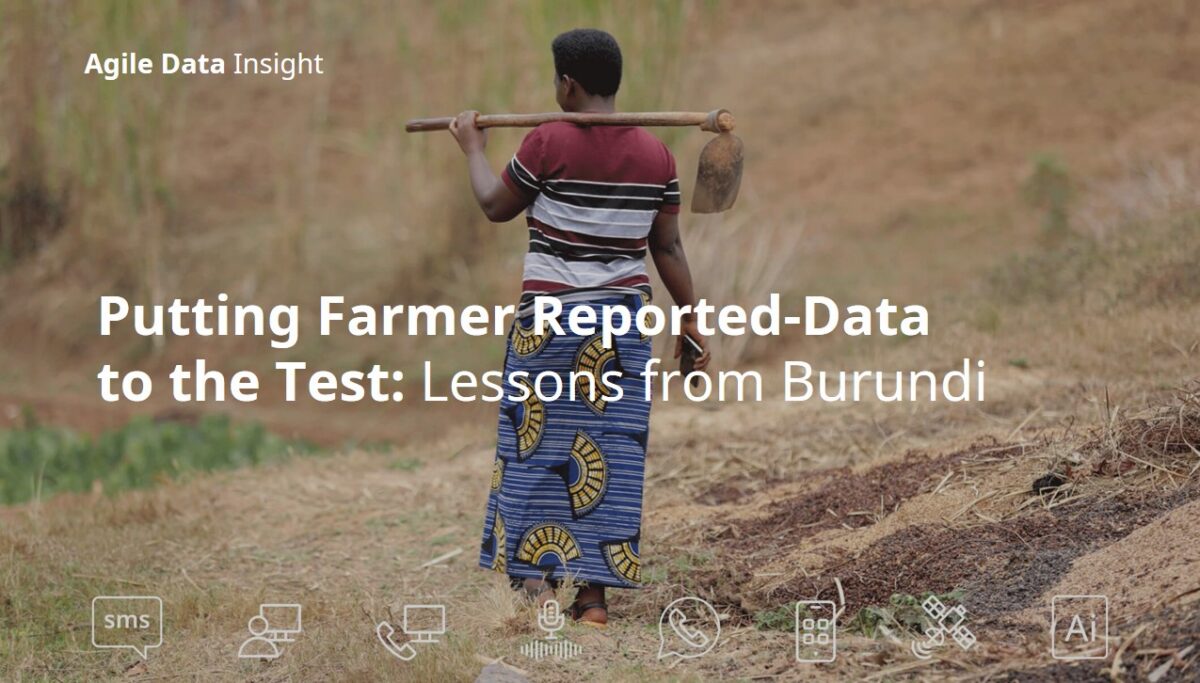
Digital data can be useful without being complete.

Where participation is sustained, app data can identify and rank production patterns almost as effectively as an in-person survey. But incomplete transaction logging makes it unreliable for estimating total production. The implication is not to replace one method with another, but to combine data sources according to their strengths.
How can we measure food system resilience in fragile and conflict-affected environments?

This paper introduces a framework combining Agile Data approaches, satellite imagery and short surveys to assess resilience and fragility across individuals, communities and institutions. It offers a practical way to track vulnerabilities, understand responses to shocks and generate timely evidence for more effective policies and interventions.

Can a familiar messaging app deliver valuable farmer insights at a fraction of the cost?

Agile Data testing in Zimbabwe suggests it can. WhatsApp surveys achieved 89% cost savings compared with face-to-face interviews, while generating useful insights into farmer behaviour and programme outcomes. But participation remained a challenge, with only 36% completing the survey. The findings highlight the importance of local languages, trusted field engagement and incentives in encouraging participation, and ensuring that lower costs translate into meaningful evidence.

What if the cheapest way to collect data is also the least effective at reaching farmers?

Agile Data testing in Zimbabwe and Sudan revealed striking differences between automated IVR surveys and human-led CATI interviews. In Sudan, 66% completed CATI surveys compared with just 7% using IVR. In Zimbabwe, CATI achieved 95% completion, while no respondents completed the IVR survey. The findings show that lower costs alone do not guarantee useful evidence. Trust, familiarity and human engagement can make a critical difference to participation and data quality.

Can telephone surveys deliver reliable evidence if some farmers are less likely to answer?

Agile Data testing across multiple countries found that CATI can generate credible agricultural data while reducing costs and improving efficiency. But participation is not equal. In Sudan, men were 6 percentage points more likely to answer than women, while wealth and conflict exposure also influenced response rates. In India, 45% of unsuccessful contact attempts involved inactive phone numbers. Despite differences in reported values, CATI and in-person surveys produced broadly consistent findings.

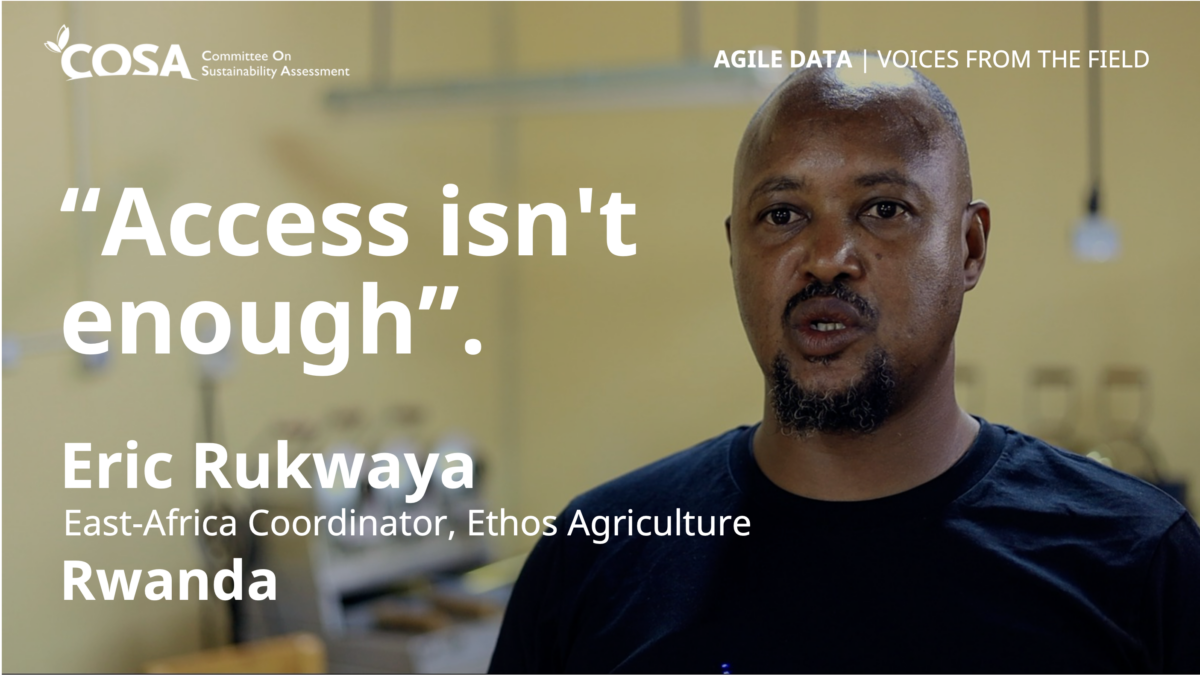
Voices from the Field | Access isn’t Enough

What if fertilizer access isn’t the whole problem?

Evidence from Malawi shows how cost, finance and climate shocks shape what farmers can actually gain from agricultural inputs—and how Agile Data can reveal these realities faster and more affordably.

What keeps farmers using a digital tool after the novelty wears off?​

In Burundi, the answer wasn’t simply technology or incentives. Farmers were more likely to stay engaged when their peers were using the tool, they learned by doing, and the data collection was relevant to what was happening on their farms.

Does real-time data mean reliable data?

In Burundi, farmer-reported App data underestimated coffee production by 24%, revealing a critical Agile Data lesson: technology alone doesn’t guarantee better data. Participation, validation and triangulation matter.

What if we could see vulnerability before it becomes crisis?

In Sudan, frequent farmer feedback revealed rising exposure to shocks and slow recovery, showing how Agile Data can help programmes identify vulnerability and adapt while there is still time to act.