


A growing collection of published evidence, insights and practical resources from across COSA’s work. The Learning Library brings together research, briefs, case studies, tools and implementation learning that translate evidence and experience into knowledge that can inform programmes, practice and decision-making.











Selected by the COSA team
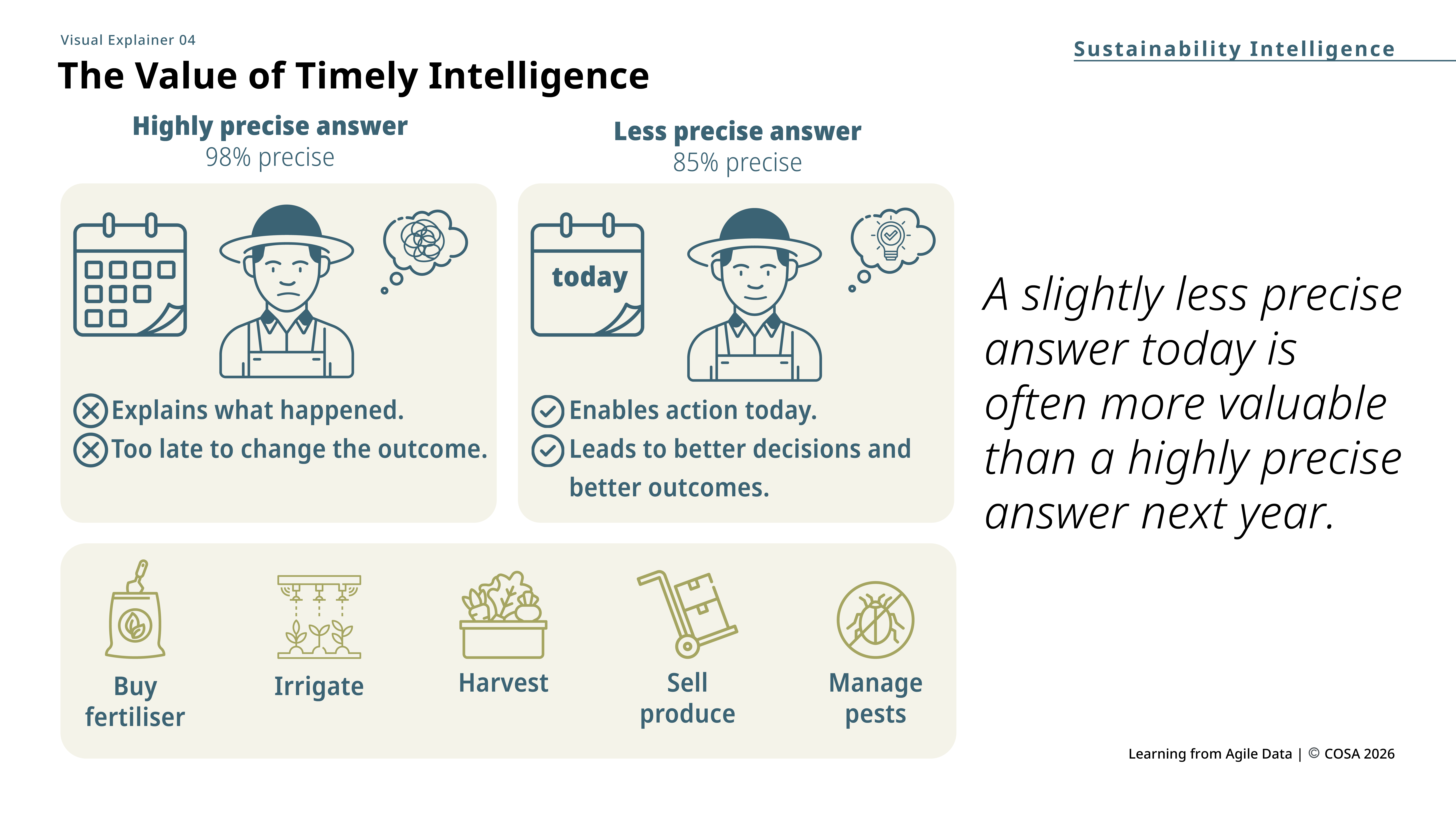
Agile Data testing in Zimbabwe suggests it can. WhatsApp surveys achieved 89% cost savings compared with face-to-face interviews, while generating useful insights into farmer behaviour and programme outcomes. But participation remained a challenge, with only 36% completing the survey. The findings highlight the importance of local languages, trusted field engagement and incentives in encouraging participation, and ensuring that lower costs translate into meaningful evidence.
Agile Data testing in Zimbabwe and Sudan revealed striking differences between automated IVR surveys and human-led CATI interviews. In Sudan, 66% completed CATI surveys compared with just 7% using IVR. In Zimbabwe, CATI achieved 95% completion, while no respondents completed the IVR survey. The findings show that lower costs alone do not guarantee useful evidence. Trust, familiarity and human engagement can make a critical difference to participation and data quality.
Agile Data testing across multiple countries found that CATI can generate credible agricultural data while reducing costs and improving efficiency. But participation is not equal. In Sudan, men were 6 percentage points more likely to answer than women, while wealth and conflict exposure also influenced response rates. In India, 45% of unsuccessful contact attempts involved inactive phone numbers. Despite differences in reported values, CATI and in-person surveys produced broadly consistent findings.
In Burundi, real-world testing showed that technology alone isn’t enough. Digital literacy, connectivity, power and trusted local support can determine whether farmers actually use, and benefit from, digital tools.
Read More
Evidence from Malawi shows how cost, finance and climate shocks shape what farmers can actually gain from agricultural inputs—and how Agile Data can reveal these realities faster and more affordably.
Read More
In Uganda, Agile Data revealed that price matters—but so do cash on hand, awareness and access. And when fertilizer became more affordable, farmers bought more and yields increased.
Read More
In India, Agile Data revealed that 85% of cotton-farming households had experienced a shock - and more than half resorted to harmful coping strategies. Faster, lower-cost data can help programmes understand resilience while there is still time to respond.
Read More
In Sudan, frequent farmer feedback revealed rising exposure to shocks and slow recovery, showing how Agile Data can help programmes identify vulnerability and adapt while there is still time to act.
Read More
In Burundi, farmer-reported App data underestimated coffee production by 24%, revealing a critical Agile Data lesson: technology alone doesn’t guarantee better data. Participation, validation and triangulation matter.
Read More
In Burundi, the answer wasn’t simply technology or incentives. Farmers were more likely to stay engaged when their peers were using the tool, they learned by doing, and the data collection was relevant to what was happening on their farms.
Read More
Agile Data testing found that IVR could reduce data collection costs by approximately 82% compared with in-person surveys. Yet field trials in Zimbabwe and Sudan revealed a critical challenge: low participation, even with shorter questionnaires. The findings show that automation alone is not enough. Trust, accessible survey design, reliable connectivity and human support are essential to turning lower costs into useful, representative evidence.
Agile Data testing in Zimbabwe and Sudan revealed a critical challenge for automated voice surveys. In Zimbabwe, no farmers completed the IVR survey, despite advance notification and financial incentives. In Sudan, just 7% completed IVR surveys, compared with 66% using human-led CATI interviews. The findings suggest that participation depends on more than technology or survey length. Trust, programme familiarity, education and respondent motivation all influence whether farmers engage and complete surveys.
Agile Data approaches can substantially reduce the cost and time required for data collection while generating informative information to support program learning and adaptive management. However, these efficiency gains come with operational trade-offs, including respondent reach, connectivity, data quality, and verification, that require deliberate design and context-specific mitigation strategies.
Agile Data testing suggests you can. CATI achieved approximately 72% cost savings compared with in-person surveys, with a 71% response rate and broadly consistent findings. By combining telephone interviews with digital data collection, it offers speed, efficiency and human engagement. But phone access, gender, trust and connectivity can affect who participates, and whose experiences are reflected in the evidence
Agile Data testing in Zimbabwe suggests it can. WhatsApp surveys achieved 89% cost savings compared with face-to-face interviews, while generating valuable insights into farmer behaviour and programme outcomes. But only 36% of participating farmers completed the survey. The findings highlight a critical trade-off: lower costs and faster feedback are valuable, but trust, accessibility and participation determine how useful, and representative, the evidence can be.
By applying agile data approaches to projects across a variety of crops and geographies over time we will continue to build our learning and share it here.